
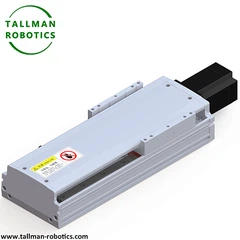


In the realm of industrial automation, three-axis gantries play a pivotal role in a wide range of applications, from manufacturing and assembly to material handling and inspection. As a trusted three-axis gantry supplier, we understand the importance of optimizing the performance of these systems to meet the diverse needs of our customers. In this blog post, we will explore various strategies and techniques to enhance the performance of three-axis gantries, ensuring maximum efficiency, accuracy, and reliability.
Understanding the Basics of Three-Axis Gantries
Before delving into optimization strategies, it is essential to have a clear understanding of the basic components and operation of three-axis gantries. A three-axis gantry typically consists of a horizontal beam (X-axis), a vertical column (Y-axis), and a moving carriage (Z-axis). These axes work together to provide precise and controlled movement in three dimensions, allowing for the manipulation of objects with high accuracy.
The performance of a three-axis gantry is influenced by several factors, including the mechanical design, the choice of components, the control system, and the operating environment. By carefully considering these factors and implementing appropriate optimization techniques, we can significantly improve the performance of the gantry and enhance its overall productivity.
Mechanical Design Optimization
The mechanical design of a three-axis gantry is crucial for achieving optimal performance. A well-designed gantry should provide sufficient stiffness, stability, and precision to ensure accurate and repeatable movement. Here are some key considerations for mechanical design optimization:

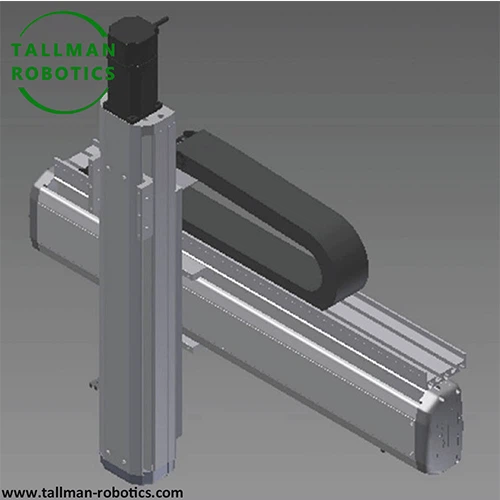
- Structural Rigidity: The gantry structure should be designed to minimize deflection and vibration, which can affect the accuracy and repeatability of the movement. This can be achieved by using high-quality materials, such as steel or aluminum, and by incorporating appropriate bracing and reinforcement.
- Guide Rails and Bearings: The guide rails and bearings play a critical role in guiding the movement of the gantry. High-quality guide rails and bearings with low friction and high load capacity should be selected to ensure smooth and precise movement.
- Drive Systems: The drive systems, such as motors and ball screws, are responsible for providing the power and motion to the gantry. The selection of appropriate drive systems is essential for achieving high-speed and high-precision movement.
Component Selection
The choice of components can have a significant impact on the performance of a three-axis gantry. Here are some key components to consider:
- Motors: The motors should be selected based on the required speed, torque, and accuracy. Servo motors are commonly used in three-axis gantries due to their high precision and controllability.
- Ball Screws: Ball screws are used to convert rotary motion into linear motion. They provide high efficiency and accuracy, making them ideal for three-axis gantries.
- Linear Guides: Linear guides are used to guide the movement of the gantry. They provide smooth and precise movement, reducing friction and wear.
Control System Optimization
The control system is the brain of the three-axis gantry, responsible for coordinating the movement of the axes and ensuring accurate and repeatable positioning. Here are some key considerations for control system optimization:
- Motion Control Algorithms: The motion control algorithms should be designed to optimize the movement of the gantry, taking into account factors such as acceleration, deceleration, and velocity. Advanced motion control algorithms, such as PID control and feedforward control, can be used to improve the accuracy and performance of the gantry.
- Feedback Systems: Feedback systems, such as encoders and sensors, are used to provide real-time information about the position and movement of the gantry. This information is used by the control system to adjust the movement of the axes and ensure accurate positioning.
- Programming and Configuration: The control system should be programmed and configured to meet the specific requirements of the application. This may involve setting up the motion profiles, defining the operating parameters, and configuring the safety features.
Operating Environment Considerations
The operating environment can have a significant impact on the performance of a three-axis gantry. Here are some key considerations for operating environment optimization:
- Temperature and Humidity: Extreme temperatures and humidity can affect the performance of the gantry, causing thermal expansion and contraction, which can lead to inaccuracies in positioning. The gantry should be operated in a controlled environment with stable temperature and humidity levels.
- Dust and Debris: Dust and debris can accumulate on the guide rails and bearings, causing increased friction and wear. The gantry should be kept clean and free of dust and debris to ensure smooth and precise movement.
- Vibration and Shock: Vibration and shock can affect the accuracy and repeatability of the gantry. The gantry should be installed on a stable and vibration-free surface to minimize the effects of vibration and shock.
Maintenance and Calibration
Regular maintenance and calibration are essential for ensuring the optimal performance of a three-axis gantry. Here are some key maintenance and calibration tasks:
- Lubrication: The guide rails and bearings should be lubricated regularly to reduce friction and wear.
- Alignment: The gantry should be aligned regularly to ensure accurate and repeatable movement.
- Calibration: The control system should be calibrated regularly to ensure accurate positioning and movement.
Conclusion
Optimizing the performance of a three-axis gantry is a complex and challenging task that requires careful consideration of various factors, including mechanical design, component selection, control system optimization, operating environment, and maintenance and calibration. By implementing the strategies and techniques outlined in this blog post, we can significantly improve the performance of the gantry and enhance its overall productivity.
If you are interested in learning more about three-axis gantries or have any questions about optimizing their performance, please feel free to contact us. We would be happy to discuss your specific requirements and provide you with a customized solution.


