
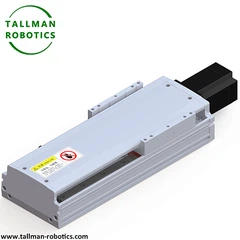


What is XYZ Robot?
An XYZ robot is a Cartesian-style automation system that positions an end-effector anywhere within a rectangular work volume by driving three independent, mutually perpendicular linear axes-X, Y, and Z. The term is often used interchangeably with "3-axis Cartesian robot" or "gantry robot," emphasizing the direct XYZ coordinate naming convention commonly used in programming and specification sheets for straightforward, intuitive motion control.
Structure
The robot comprises a base frame carrying the X-axis linear guide, a carriage traveling along the X-axis that supports the Y-axis assembly, and a Z-axis mounted on the Y-carriage to provide vertical tool movement, often the shortest-travel axis for fast up/down cycling. Each axis uses ball screw, belt-drive, or linear motor actuation paired with servo or stepper motors and linear guide rails, with position feedback from encoders coordinated through a central multi-axis controller.
Selection Considerations
Key factors include travel range per axis, payload capacity (especially at the Z-axis tool point), positioning accuracy and repeatability, maximum speed and acceleration, drive type matched to precision/speed requirements, end-effector mounting interface, and controller compatibility for coordinated multi-axis motion programming.
Applications
XYZ robots are used in pick-and-place assembly, dispensing and coating, 3D printing, PCB inspection and handling, CNC machining support, laboratory automation, and material handling where precise, repeatable positioning within a defined rectangular volume is required.
Installation Considerations
The base frame must be installed level and square to maintain perpendicularity across all three axes. Belt tension or screw preload should be set to specification, and the end-effector must be securely mounted with verified tool-center-point alignment. Cable management should accommodate full simultaneous multi-axis travel, and coordinated motion accuracy should be tested across the complete work envelope before commissioning.
Here, we introduce the combination options of Muti Axis Linear Modules in applications with code as follows for you to select for your projects:
You are welcome to watch more projects or visit our video gallery by Youtube: https://www.youtube.com/@tallmanrobotics
|
|
|
|
|
|
TM-FA |
TM-FB |
TM-FB2Z2 |
TM-FBZ2 |
|
|
|
|
|
|
TM-FC |
TM-FCZ |
TM-FD |
TM-FDZ |
|
|
|
|
|
|
TM-FE |
TM-FEZ |
TM-FF |
TM-FFZ |
|
|
|
|
|
|
TM-FG |
TM-FF2 |
TM-FGZ |
TM-FBZ2 |


|
Model of Each Axis |
Model of Each Axis |
Model of Each Axis |
||||||
|
X Axis |
Y Axis |
Z Axis |
X Axis |
Y Axis |
Z Axis |
X Axis |
Y Axis |
Z Axis |
|
TM100 |
TM45 |
TM135 |
TM100 |
TM100 |
TM150 |
TM135 |
TM135 |
|
|
TM100 |
TM62 |
TM135 |
TM135 |
TM100 |
TM200 |
TM100 |
TM62 |
|
|
TM100 |
TM100 |
TM45 |
TM135 |
TM135 |
TM135 |
TM200 |
TM100 |
TM100 |
|
TM100 |
TM100 |
TM62 |
TM150 |
TM62 |
TM200 |
TM135 |
TM100 |
|
|
TM100 |
TM100 |
TM100 |
TM150 |
TM100 |
TM62 |
TM200 |
TM150 |
TM100 |
|
TM135 |
TM62 |
TM150 |
TM100 |
TM100 |
TM200 |
TM150 |
TM135 |
|
|
TM135 |
TM100 |
TM62 |
TM150 |
TM135 |
TM100 |
|||
|
Model of Each Axis |
Model of Each Axis |
Model of Each Axis |
|||||||
|
X Axis |
Y Axis |
Z Axis |
X Axis |
Y Axis |
Z Axis |
X Axis |
Y Axis |
Z Axis |
|
|
TM100 |
TM45 |
TM135 |
TM100 |
TM100 |
TM150 |
TM135 |
TM135 |
||
|
TM100 |
TM62 |
TM135 |
TM135 |
TM100 |
TM200 |
TM100 |
TM62 |
||
|
TM100 |
TM100 |
TM45 |
TM135 |
TM135 |
TM135 |
TM200 |
TM100 |
TM100 |
|
|
TM100 |
TM100 |
TM62 |
TM150 |
TM62 |
TM200 |
TM135 |
TM100 |
||
|
TM100 |
TM100 |
TM100 |
TM150 |
TM100 |
TM62 |
TM200 |
TM150 |
TM100 |
|
|
TM135 |
TM62 |
TM150 |
TM100 |
TM100 |
TM200 |
TM150 |
TM135 |
||


FAQ
Is an XYZ robot the same as a Cartesian robot?
Yes, "XYZ robot" is essentially another name for a 3-axis Cartesian robot, referencing the three linear coordinate axes it moves along.
What's the typical positioning accuracy of an XYZ robot?
Accuracy depends on drive type and build quality, but well-built units commonly achieve repeatability in the range of tens of microns to a few tenths of a millimeter, with ball-screw-driven axes typically outperforming belt-driven ones.
Can an XYZ robot handle heavy payloads?
Payload capacity depends heavily on frame size, axis rigidity, and drive selection-compact benchtop units suit light dispensing or assembly tasks, while industrial gantry-scale XYZ robots can handle much heavier loads.
What controllers are compatible with XYZ robots?
Most XYZ robots use dedicated multi-axis motion controllers or PLC-based systems capable of coordinated point-to-point or continuous-path control, often integrating with industrial protocols like EtherCAT or Modbus.
How is an XYZ robot different from a 6-axis articulated robot?
An XYZ robot moves in straight lines along three fixed axes, offering simpler programming and higher linear accuracy, while a 6-axis articulated robot uses rotary joints for greater flexibility and reach in complex, non-linear motion paths.
Hot Tags: xyz robot, China xyz robot manufacturers, suppliers, factory, Multi Axis Linear Motion Stage, Multi Axis Linear Platform System, 3 Axis Gantry Platform, Multi Axis Linear Positioning System, Multi Axis Linear Actuator Module, Triaxial Gantry Manipulator


